When Should You Replace Your Burglar Alarm System at Commercial Spaces?
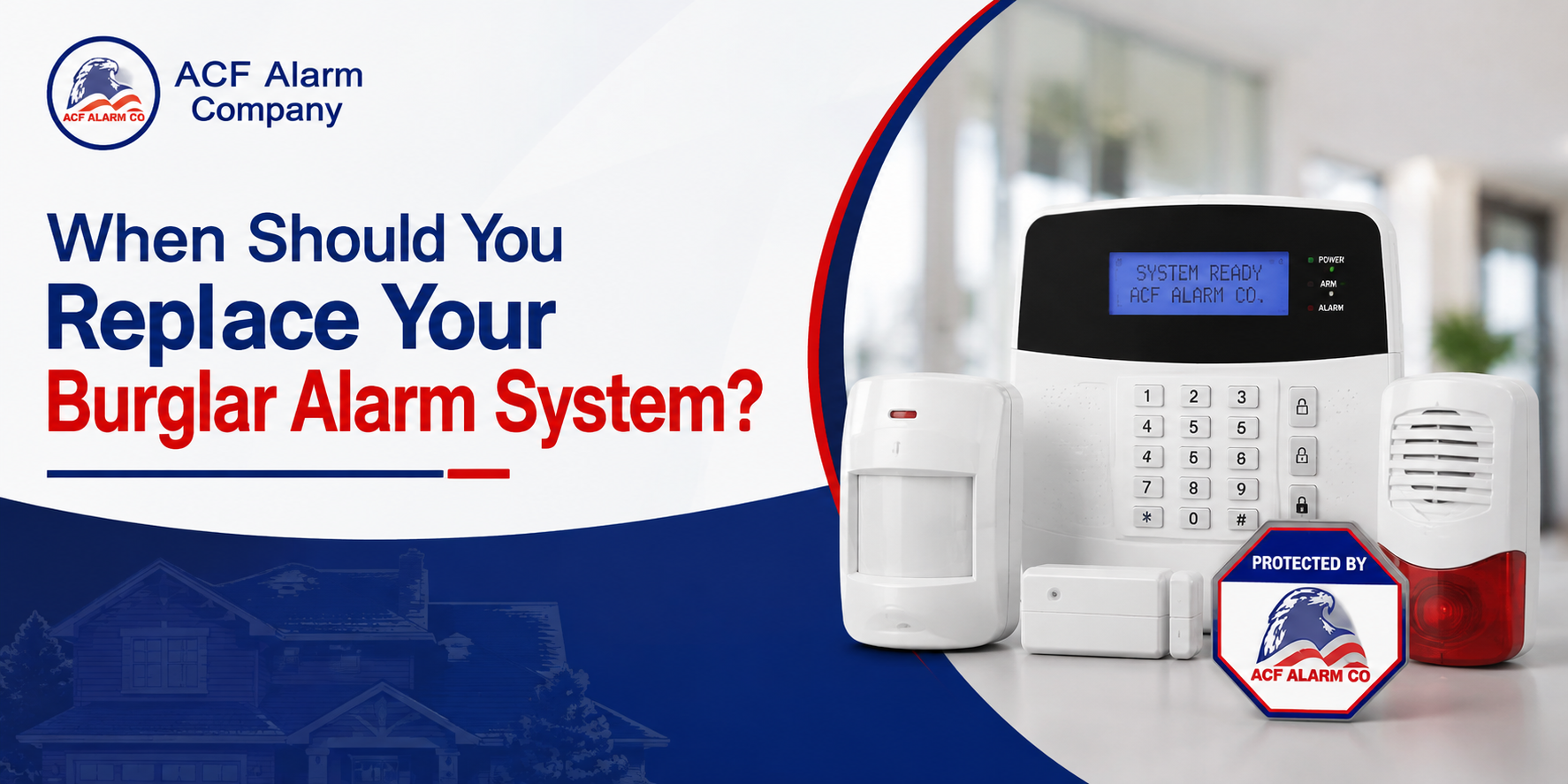
A burglar alarm should fit the way your business and property operate today. Over the years, entrances change, departments move, new equipment is added, and employee schedules become more complex. Even if an older alarm still turns on and off normally, its original design may no longer provide the coverage your property needs.
Replacement is not always the first answer. Sometimes an alarm service visit, sensor adjustment, or equipment repair can correct the problem. However, certain signs suggest that it is worth reviewing the entire system rather than continuing with individual fixes.
New Doors or Windows Are Not Properly Covered
Renovations can change the number and location of potential entry points. A new exterior door, loading entrance, storefront window, or remodeled reception area may not be covered by the original burglar alarm system.
This is particularly important if construction work was completed without reviewing the alarm afterward. A security assessment can identify entry points that lack appropriate door and window sensors and determine if the existing system can support additional devices.
Employees Frequently Trigger the Alarm by Accident
An occasional mistake can happen, but regular accidental activations may indicate a larger problem with the alarm setup.
Cleaning crews may enter after certain areas have been armed. Employees working late may accidentally enter protected sections. Delivery staff might use an entrance that was previously inactive.
Instead of repeatedly changing workplace routines to accommodate the alarm, consider if the commercial security system should be reconfigured or replaced to better match current operations.
The System Cannot Handle Partial Building Closures
Not every commercial property operates as one open or closed space.
A warehouse may remain active while the office section is closed. One department might work late while other areas need to be secured. Retail businesses may also need stockrooms protected while employees remain elsewhere in the building.
If the existing alarm makes it difficult to manage separate security areas, a newer intrusion detection system may provide more practical control over different zones.
Physical Changes Are Affecting Sensor Coverage
Alarm performance can be affected by changes that have nothing to do with the equipment itself.
Tall warehouse racks, new office partitions, machinery, displays, and storage units can alter the area covered by motion detectors. A detector installed years ago may still function correctly but no longer monitor the intended space effectively.
Reviewing sensor placement after significant layout changes can show if repositioning devices is sufficient or if the alarm design needs a larger update.
Your System Cannot Support Enough Individual Users
A growing workforce can expose limitations in an older alarm system.
Businesses may need individual security codes for managers, opening staff, closing teams, maintenance personnel, or other authorized employees. If people are forced to share codes because the system cannot accommodate enough users, it becomes harder to understand who accessed or secured the property.
Newer business alarm systems may provide better options for managing individual users and reviewing system activity.
You Have Added Areas With Higher Security Needs
The most important areas of a business can change over time.
A company might add a server room, start storing higher-value inventory, purchase expensive machinery, or create a restricted records area. These spaces may require additional security sensors or a different level of intrusion detection than the original alarm provides.
Rather than assuming existing coverage is sufficient, review the system whenever valuable assets are relocated or added.
Normal Security Changes Require Frequent Service Visits
Some alarm systems become increasingly difficult to manage as they age. Adding a user, changing a zone, replacing a device, or making another routine adjustment may require more technician time because of older programming or limited compatibility.
If minor changes regularly turn into larger service calls, ask your alarm service provider about the long-term practicality of keeping the current equipment.
Replacement may reduce the need to continually work around limitations in an outdated platform.
You Cannot Confirm That Every Sensor Is Active
A device mounted on a door, window, or wall is not necessarily an active part of the alarm.
Building modifications, previous repairs, programming changes, and older wiring can leave devices disconnected or assigned incorrectly. This can be particularly difficult to identify in a property with little documentation about its security system.
Professional burglar alarm testing can confirm which devices are communicating correctly and which areas require attention.
Your Business Is Moving Toward Keyless Access
Adding access control systems can change the way employees enter and leave a property. If your business is introducing cards, credentials, or other controlled-entry methods, it is a good opportunity to review the burglar alarm at the same time.
An older alarm may still be usable, but its capabilities should be evaluated before other major security investments are made. Looking at the systems together can help identify compatibility or operational limitations early.
Your Alarm Was Designed Around Basic Coverage
Some commercial alarm systems were originally installed to monitor only primary doors, windows, and a few interior areas.
Your security expectations may now be different. Loading docks, inventory rooms, equipment areas, secondary entrances, and other locations may need additional attention.
Repeatedly adding individual sensors is not always the best answer, particularly if the existing alarm control panel is already near its capacity. A replacement system can be designed around how the entire property is currently used.
Have the System Evaluated Before Replacing It
Not every outdated feature means the entire alarm needs to go. Some existing sensors, wiring, or other components may still be useful.
A professional evaluation can check sensor operation, zone configuration, user capacity, panel condition, communication equipment, and current coverage. This gives you a clearer basis for deciding between repair, partial upgrades, and complete replacement.
Review Your Commercial Alarm System With ACF Alarm
If your current burglar alarm no longer fits your building or daily operations, ACF Alarm can help assess your commercial security requirements. Our services include commercial burglar alarms, monitoring, access control, and video surveillance solutions.
Contact us to learn more and request a quote for your business.