Layered Security Plans for Commercial Properties
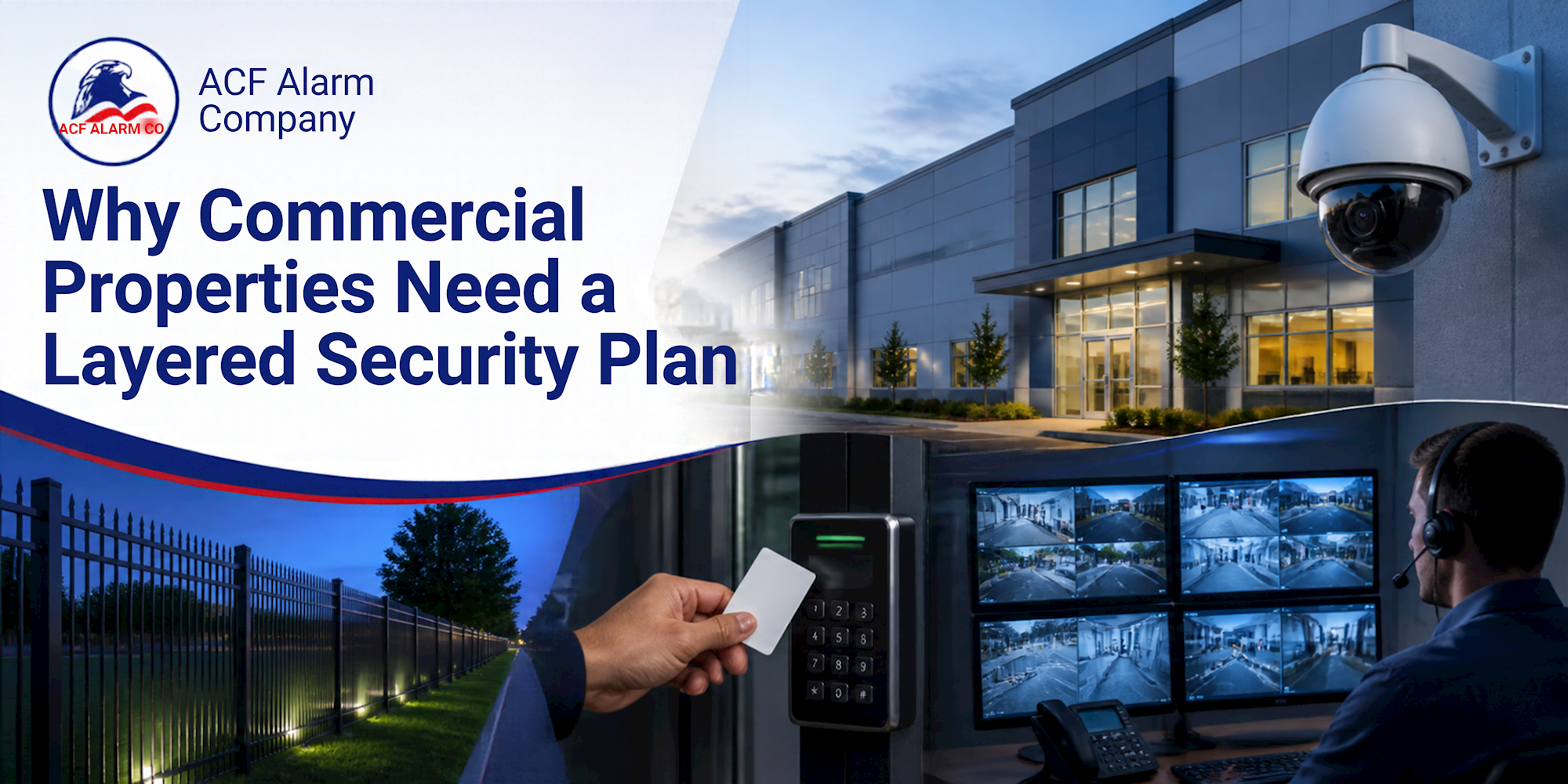
Why Commercial Properties Need a Layered Security Plan
Commercial buildings often have multiple entry points, high-value equipment, sensitive business information, and areas that remain unattended after working hours. Protecting these spaces requires more than installing an alarm at the main entrance.
A security incident can begin in an unexpected location, such as a loading dock, storage room, parking area, or restricted office. Without proper protection, businesses may discover the problem only after damage or losses have occurred.
A layered security plan addresses these concerns by combining commercial alarm monitoring services, video surveillance, access control technology, and intrusion detection systems. Each security measure plays a different role in identifying threats, controlling access, and supporting a timely response.
Why a Single Security System May Not Be Enough
A commercial alarm system is valuable for detecting unauthorized entry, but security risks are not limited to break-ins.
For example, an employee may accidentally leave a restricted door unlocked, suspicious activity may occur in a parking lot, or an emergency may develop in an unattended section of the building.
Relying on one protective measure can leave gaps in security coverage.
A multi-layered commercial security system addresses different risks at different stages. One layer may discourage unauthorized access, another may detect suspicious activity, and a third may help initiate an appropriate response.
This approach gives property managers greater visibility and control over their facilities.
Essential Security Layers for Commercial Properties
1. Exterior Protection to Identify Risks Early
Security planning should begin outside the building. Exterior areas are often the first places where unauthorized activity occurs.
Parking garages, delivery entrances, loading docks, and exterior storage spaces require careful attention.
Perimeter security solutions may include outdoor surveillance cameras, motion sensors, door contacts, and security lighting.
For example, cameras near a warehouse loading dock can record activity outside regular delivery hours. Motion detection equipment can provide additional alerts in designated areas.
These measures create an initial protective layer before someone reaches sensitive interior spaces.
2. Entry Management to Prevent Unauthorized Access
Commercial properties frequently accommodate employees, contractors, delivery personnel, and visitors. Managing their movement becomes difficult if every person can access the same areas.
Electronic access control systems help businesses regulate who can enter specific locations.
Keycard readers, electronic locks, and access credentials can be used to manage entry to offices, server rooms, inventory storage areas, and other restricted spaces.
Property managers can also review access records to investigate unusual activity.
This is particularly useful for businesses operating across multiple departments or shifts.
3. Professional Alarm Monitoring for Continuous Protection
Security concerns do not disappear after employees leave for the day. Many commercial properties remain unattended overnight, during weekends, and on holidays.
Professional commercial alarm monitoring services help businesses maintain protection during these periods.
If a monitored intrusion alarm activates, signals are transmitted to a monitoring center, where operators follow established verification and notification procedures.
Depending on the situation and monitoring agreement, the response may involve contacting designated personnel or requesting emergency assistance.
24-hour commercial security monitoring is especially valuable for retail establishments, office complexes, warehouses, and businesses storing expensive equipment.
4. Video Surveillance to Understand Security Incidents
An alarm can indicate that something has happened, but surveillance footage may provide additional details about the incident.
Commercial security cameras allow businesses to observe activity in important areas, review recorded events, and investigate suspicious behavior.
Strategic camera placement can support monitoring around:
- Main entrances and reception areas
- Parking lots and vehicle access points
- Warehouses and inventory storage rooms
- Loading docks and delivery zones
- Common areas and building corridors
Integrating compatible cameras with other security equipment can also help authorized personnel review events more efficiently.
5. Fire and Emergency Detection for Property Safety
A complete security strategy must also consider emergencies that are not related to theft or unauthorized entry.
Fire, smoke, and equipment-related hazards can interrupt business operations and threaten occupant safety.
Commercial fire alarm systems and monitored detection equipment can help identify certain emergencies and initiate appropriate notifications.
Businesses should also maintain clear evacuation procedures, inspect safety equipment, and follow applicable building and fire codes.
How Different Security Layers Work Together
Consider a commercial office building that closes at 7 PM.
An unauthorized individual approaches a side entrance after business hours. Exterior cameras record activity near the entrance. If the person attempts to use an access-controlled door, the system restricts entry without valid credentials.
If the individual forces the door open and activates an intrusion sensor, the alarm system sends a signal to the monitoring center. Operators can then follow the property's established response procedures.
Each protective measure serves a different purpose, but together they create a more coordinated security response.
Practical Steps to Strengthen Commercial Building Security
A layered plan should reflect the property's layout, daily operations, and potential vulnerabilities.
Businesses can begin by:
- Conducting a security assessment: Identify poorly monitored areas, vulnerable doors, and valuable assets.
- Reviewing existing security equipment: Check alarm coverage, camera positioning, and access permissions.
- Connecting compatible security systems: Consider integrations that support centralized management and incident review.
- Establishing response procedures: Assign responsibilities for alarm notifications and emergency situations.
- Scheduling regular maintenance: Test sensors, inspect equipment, and update access permissions as staffing changes.
Regular reviews help keep the security strategy aligned with the property's changing requirements.
Build a Stronger Commercial Security Plan with ACF Alarm
Every commercial property has areas that need attention, from public entrances to restricted storage spaces. A layered approach combines multiple security measures to provide broader protection and better incident awareness.
ACF Alarm offers commercial alarm systems, professional monitoring, access control, video surveillance, and fire protection solutions for businesses in St. Louis.
Looking to improve your property's security? Contact us at ACF Alarm's commercial security solutions and speak with the team about your building's protection needs.
Call 314-869-8500 or email Sales@ACFalarm.net to discuss your commercial security requirements.